

When Should I Replace My Running Shoes?
When Should I Replace My Running Shoes?
Key Takeaways
-
Most running shoes need replacing every 300–500 miles (roughly 480–800 km), which translates to about 4–8 months for runners logging 15–25 miles per week.
-
Personal warning signs—new aches in your knees or hips, flattened cushioning, uneven wear on the outsole, and reduced grip—matter more than hitting an exact mileage number.
-
Heavier runners, those running on hard concrete, and athletes doing aggressive training like intervals or hill sprints will typically wear shoes out faster than the average.
-
Rotating two pairs or more, keeping them clean, and using them exclusively for running can add weeks or even months to each pair of shoes’ usable life.
-
Even shoes that look fine on the outside may have lost significant shock absorption on the inside, increasing your risk of overuse injuries.
Why Replacing Running Shoes Matters
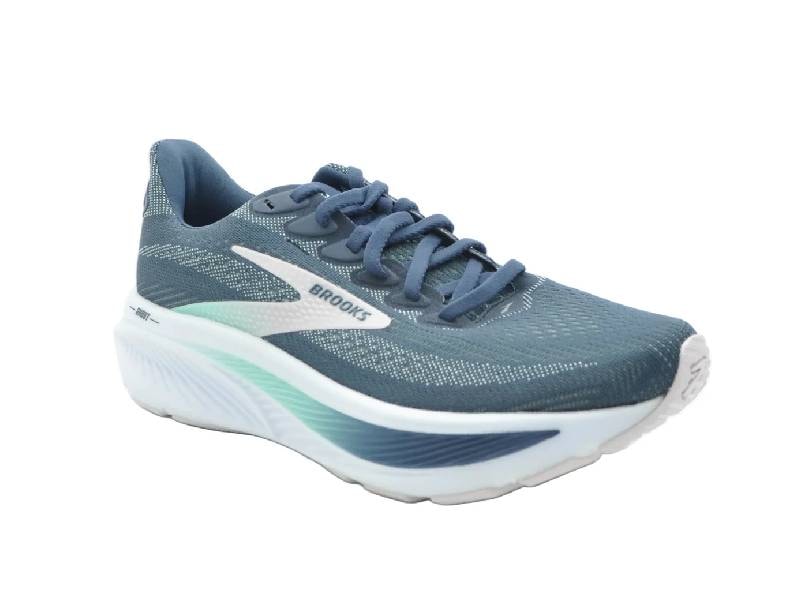
Your running shoes slowly lose their protective qualities long before they look destroyed from the outside. The foam may appear intact, the laces might still be fresh, and the upper could show barely a scuff—yet the internal structure that keeps you safe has already begun to fail.
-
Midsole compression
The midsole foam—whether EVA, TPU, or advanced super-foams used by brands such as Nike, Asics, HOKA and Brooks—compresses with every step. As mileage increases, this compression becomes permanent. Manufacturer testing shows that midsoles can lose up to 50% of their energy return after roughly 300 miles, reducing their ability to absorb impact and increasing stress on your ankles, knees, hips and lower back. -
Loss of traction
As the outsole tread wears down, grip gradually decreases. This is particularly noticeable on wet roads, tight track turns and light trails. Reduced traction not only increases the risk of slipping but can also subtly change your running gait as your feet try to compensate for the lack of stability. -
Increased muscle fatigue
One of the clearest signs that a shoe is past its best is how your legs feel. Easy runs may start to feel unusually demanding, and muscle soreness can linger into the next day despite no increase in training volume. That “bottomed-out” feeling—where the ground feels harsh beneath your feet—is a strong indication that the cushioning is no longer doing its job.
Replacing shoes at the right time usually costs far less than dealing with physio appointments or medical treatment for overuse injuries triggered by worn out shoes.
How Long Do Running Shoes Last?
There’s no single rule that applies to every runner, but most major running shoe brands agree on similar lifespan ranges based on laboratory testing and real-world use.
In general, standard daily training shoes from brands such as Asics, Brooks, Saucony, New Balance and Nike tend to last between 300 and 500 miles (around 500–800 km). Within this range, the shoe usually retains sufficient cushioning, stability and shock absorption for safe running.
Lightweight tempo shoes and racing models often have a noticeably shorter lifespan. This is especially true for modern carbon-plated racing shoes, which are designed to maximise performance rather than durability. Many runners find that these shoes begin to lose their responsive feel after 150–300 miles (240–480 km).
Your weekly mileage plays a major role in how frequently you’ll need to replace your running shoes. As a general guideline:
-
10–15 miles per week (16–24 km): shoes typically last 6–12 months
-
20–30 miles per week (32–48 km): expect a lifespan of around 4–6 months
-
30–40 miles per week (48–64 km): shoes may need replacing after 3–4 months
-
40+ miles per week (64+ km): most runners will need new shoes every 2–3 months
These timeframes are approximate, but they provide a useful reference for understanding how training volume accelerates wear and tear.
Age matters too. Even if you haven’t hit the mileage threshold, midsole foams can harden and oxidise after 1–2 years in storage. If your old shoes have been sitting in a cupboard through hot summers or humid conditions, they may have lost significant cushioning before you even lace them up.
The 300–500 Mile Rule (and What It Really Means)
The 300–500 mile rule (500–800 km) serves as a helpful planning tool rather than a strict expiry date. Think of it as a window during which you should start paying closer attention to your shoes rather than a hard cutoff.
Here’s what this looks like in practice: a runner doing 20 miles per week reaches 400 miles in about 5 months. At that point, they should be actively inspecting their current shoes for signs of wear and considering when to buy a new pair.
The lower end of the range (~300 miles) is more realistic for:
-
Heavier runners who compress foam more with each step
-
Those running primarily on firm concrete surfaces
-
Athletes doing high-intensity sessions like intervals or hill sprints
The upper end (~500 miles) suits:
-
Lighter runners with efficient form
-
Those running mostly easy mileage on softer surfaces
-
Runners using well-built daily trainers with durable outsoles
Carbon-plated racers deserve special mention. These shoes may feel past their best for racing purposes after 150–250 miles, even if they look intact. Many runners downgrade them to training use once they’ve lost their responsive edge, getting additional mileage for easier sessions before retiring them completely.
What Affects Running Shoe Lifespan?
Two runners can get dramatically different mileage out of the same pair of running shoes. This isn’t about luck or manufacturing variance—it’s about individual factors that change how quickly shoes lose their cushioning and support.
The main variables that affect lifespan include:
-
Body weight and build
-
Running surface and terrain
-
Running style and gait mechanics
-
Shoe construction and foam type
-
Climate (heat and humidity accelerate foam breakdown)
-
Maintenance habits
Don’t compare your shoe mileage directly to friends or online reviews. A 140-pound runner doing easy miles on a treadmill will get vastly different life from their shoes than a 180-pound runner doing intervals on concrete.
Recording your shoe purchase date, first-use date, and approximate weekly usage helps you spot personal patterns over time. After retiring a few pairs, you’ll develop an intuitive sense of how long your shoes last under your specific conditions.
Your Running Surface
Shoes are engineered with specific terrain in mind, and running them on the wrong surface accelerates wear significantly.
Constant running on hard concrete pavements or city streets generally wears midsoles and outsoles faster than running on asphalt tracks, cinder paths, or treadmill belts. The unforgiving nature of concrete transmits more force through the shoe, compressing the foam more aggressively with each foot strike.
Road shoes taken onto rocky trails or gravel towpaths often show:
-
Faster outsole rubber wear
-
Cuts and gouges in the tread
-
Damage to exposed midsole foam at the edges
-
Premature breakdown of the upper mesh
Match shoes to terrain: road trainers for asphalt and pavements, trail shoes with lugs for mud and roots, track spikes or flats for synthetic tracks.
For wet, dark winter conditions, pairing appropriate footwear with safety practices is essential—especially when running outdoors in Ireland. Our guide on Tips for Safe Winter Running offers practical advice to stay active all season.
Your Running Style
Your foot-strike pattern and gait mechanics dictate exactly where your shoes wear out first—and how quickly they lose structural integrity.
Heel strikers typically wear down the rear outer heel rubber first. If you look at your old pair, you’ll likely see the most significant tread loss in this area. Midfoot or forefoot strikers, by contrast, commonly wear the forefoot and toe-off zone more quickly.
Overpronation or supination creates asymmetrical wear patterns. Place your shoes on a flat table and look at them from behind. If they tilt noticeably to one side—inner edge for overpronators, outer edge for supinators—the shoe support has begun to fail. A shoe that leans won’t provide proper stability, regardless of how much tread remains.
Consider getting a simple gait analysis at a running store or filming yourself on a treadmill to understand your wear pattern. This knowledge helps you choose models that suit your mechanics and watch for warning signs specific to your feet.
Inefficient running form—overstriding, heavy landing, excessive vertical oscillation—increases impact forces and can prematurely wear your shoes. Technique work focused on cadence and posture indirectly helps your shoes last longer by reducing the punishment they absorb with each stride.
Your Weight and Build
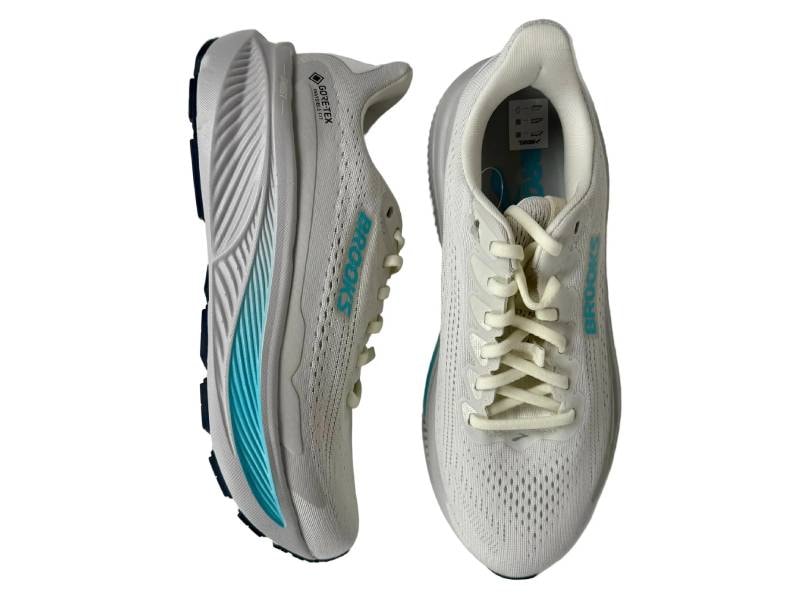
Most shoes are tested and designed around an “average” runner weight, which means results differ significantly at the extremes of the weight spectrum.
Heavier or taller runners compress midsoles more with each step. This increased force accelerates foam fatigue and pushes many runners toward the 300–350 mile end of the replacement range rather than the full 500 miles. Research from 361sport confirms that higher ground impact forces—often correlated with body weight—shorten effective shoe mileage.
If you’re a larger runner, consider:
-
More robust daily trainers with thicker midsoles
-
Models with durable rubber coverage rather than exposed foam
-
Stability features that resist breakdown under heavier loads
-
Avoiding ultra-light minimalist shoes that lack structural reinforcement
Very light runners may safely reach closer to 450–500 miles in well-built trainers, provided other factors like surface and intensity remain moderate. Models like the Brooks Adrenaline GTS are specifically designed for stability and support—see our in-depth review of the Brooks Adrenaline GTS running shoe to find out who it suits best.
If you regularly feel the ground “coming through” early in a shoe’s life, experiment with models designed for higher support or maximum cushioning. These typically use denser foams and more substantial outsoles that better withstand increased loads.
How Do You Know When Your Running Shoes Are Worn Out?
Visible wear, how the shoe feels when running, and how your body responds afterward matter far more than the number displayed on your GPS app. Many runners push their favourite pair well past its useful life simply because it doesn’t look worn out.
Physical signs to check:
-
Flattened or deeply creased midsole foam (especially under the heel and forefoot)
-
Noticeably smoother or bald patches on the outsole tread
-
Frayed or collapsed upper material around the heel collar
-
A shoe that tilts to one side when placed on a flat surface
-
Hot spots or new aches in your feet during runs
Body signals that indicate worn out shoes:
-
New knee pain that appears during runs in your old pair
-
Shin discomfort or Achilles soreness that wasn’t present before
-
Hip or lower back aches that correlate with specific shoes
-
Symptoms that disappear when you switch to a newer pair
Try this simple at-home test: place your current shoes on a table and check for tilt. Then press firmly into the midsole under the heel and forefoot. Compare the softness to a newer shoe—if your old shoes feel noticeably harder or unresponsive, the foam has compressed beyond its useful life.
Use mileage as confirmation rather than the primary signal. If you’re at approximately 350–450 miles and noticing any of these signs, it’s time to start shopping for your next pair.
How to Track Your Running Shoe Mileage
Tracking shoe mileage prevents the unpleasant surprise of realising all your shoes are worn out at once—a situation that forces either running in dead shoes or making a rushed purchase.
App-based tracking offers the easiest solution. Platforms like Strava, Garmin Connect, Nike Run Club, and ASICS Runkeeper let you assign a shoe to each run and track total distance on that pair. Most allow you to set alerts—Strava, for example, can notify you when a pair hits a custom mileage threshold like 400 km.
Manual tracking works just as well for runners who prefer simplicity:
-
Note the purchase date inside the tongue with a permanent marker
-
Estimate your average weekly mileage
-
Calculate approximate total miles each month
-
Keep a simple spreadsheet or notebook entry
When you rotate more than one pair—using different shoes for easy days, speed sessions, long runs, and races—track each pair separately. This ensures you accurately assess each shoe’s remaining life rather than averaging across your collection.
Set a reminder around 300 miles to start inspecting your shoes closely rather than waiting until an app declares them “expired.”
How Do I Make My Running Shoes Last Longer?
Smart habits can extend shoe life without compromising safety or running performance. The goal isn’t to squeeze double the mileage from every pair—that risks injury—but to avoid unnecessary wear from non-running use or poor storage.
Key strategies that genuinely help:
-
Wear shoes only for running
-
Unlace properly every time
-
Keep shoes clean and dry
-
Choose appropriate socks
-
Rotate multiple pairs
Even with perfect care, shoes have a finite lifespan. These practices simply help you reach the upper end of the realistic range rather than retiring shoes prematurely.
Only Wear Your Running Shoes for Running
Many runners unknowingly shorten their shoe life by wearing their main pair for errands, commuting, dog walks, or gym classes. Every non-running step still compresses the midsole and wears the outsole—adding “invisible” miles that never appear in your running log.
Keep a separate pair of casual trainers for everyday wear. Reserve your current running shoes exclusively for workouts and races. This single habit can add significant mileage to each pair.
When your previous pair reaches the end of its running life, downgrade it to walking, gardening, or other low-impact activities. Most shoes that have lost their running performance still feel comfortable enough for short walks. This approach helps justify the cost of new running shoes since the old pair continues serving a purpose.
Always Undo and Redo Laces
Forcing shoes on and off without untying strains the heel counter and stretches the upper prematurely. That convenience comes at a cost.
Crushing the heel cup while slipping your foot in breaks down the internal structure that holds your heel in place. Once the heel counter loses rigidity, you’ll experience heel slippage and blisters—problems that make the shoe uncomfortable regardless of how much cushioning remains.
Take a few extra seconds to:
-
Fully loosen the laces before putting shoes on
-
Untie them completely when removing shoes
-
Avoid using your opposite foot to push shoes off
Runners who want convenience can use elastic or “lock” laces, but should still avoid stomping into the shoe with a collapsed heel. Well-laced shoes also maintain a consistent fit, reducing hot spots that damage the interior lining.
Keep Your Shoes Clean
You don’t need spotless shoes, but basic cleaning protects materials and glue bonds that hold everything together.
After wet or trail runs:
-
Gently knock off mud and debris
-
Remove stones from outsole grooves
-
Wipe down uppers with a damp cloth
For deeper cleaning:
-
Use lukewarm water and mild soap
-
Apply with a soft brush or cloth
-
Avoid washing machines and dryers—heat and tumbling can deform midsoles and separate glued components
Air-dry at room temperature, stuffing with newspaper or paper towels to absorb moisture. Never place shoes on radiators, in direct sunlight, or on hot car dashboards. Heat accelerates foam breakdown and causes adhesives to fail.
Remove insoles occasionally to air out. This reduces odor and slows bacterial breakdown of interior fabrics that can make even lightly-used shoes feel uncomfortable.
Wear the Correct Socks
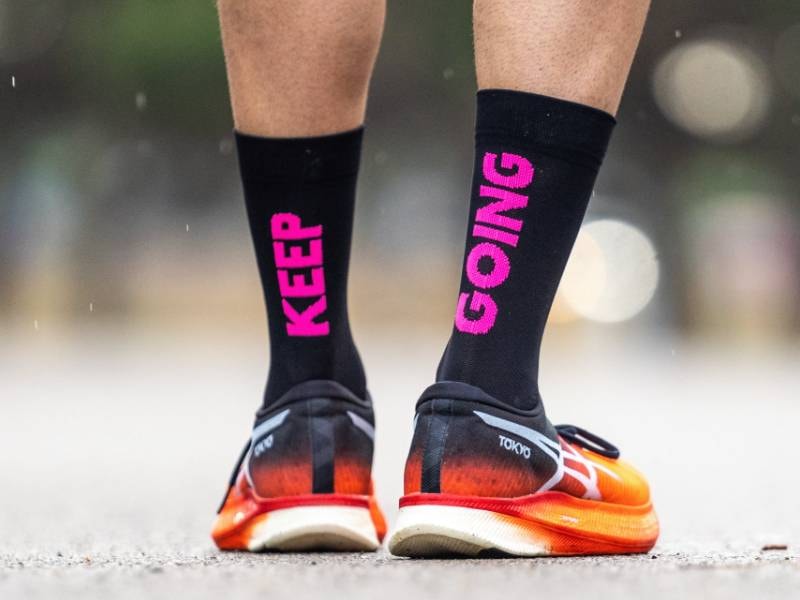
Socks affect both comfort and how the inside of your shoes ages over time. Poor sock choices create friction, moisture, and wear and tear on interior materials.
Choose technical running socks made from synthetic blends or merino wool. These materials reduce friction and wick sweat away from the shoe’s inner surfaces. Cotton socks hold moisture against the shoe lining, accelerating material breakdown and creating conditions for bacterial growth.
Very low-cut socks sometimes allow the heel collar to rub directly on skin, causing:
-
Faster wear of the interior lining
-
Increased chance of blisters
-
Less cushioning comfort over time
Select sock heights that cover the heel collar. Well-fitted socks—not baggy or excessively thick—prevent internal abrasion while maintaining the intended fit of your shoes. Dry, properly-fitted socks also prevent salt and moisture buildup that can stiffen fabrics over time.
Rotate Multiple Pairs
Owning at least two pairs of running shoes—budget permitting—offers benefits beyond simple convenience.
Rotating pairs (for example, a cushioned daily trainer and a lighter tempo shoe) allows foam to decompress fully between runs. Brooks and other manufacturers note that giving midsoles at least 24 hours to recover helps maintain responsiveness longer. The foam literally needs time to spring back to its original shape.
Research suggests that runners who alternate shoes may experience lower injury risk. Different models load muscles and tendons in slightly varied ways, reducing the repetitive stress patterns that contribute to running injuries like shin splints or IT band syndrome.
Practical rotation strategies:
-
Avoid wearing the same pair on back-to-back high-impact days
-
Use a newer pair for longer runs or harder sessions
-
Keep an older but serviceable pair for short recovery runs or bad-weather days
-
Consider other pairs for specific purposes—racing shoes for competitions, trail shoes for off-road
If you’re choosing shoes for slippery winter conditions, our guide to running shoes for wet and muddy winter roads can help you select appropriate options.
FAQ
How many months do running shoes usually last if I don’t track miles?
For runners covering about 10 miles (16 km) per week, expect shoes to last around 8–12 months. At 20 miles (32 km) per week, plan for 4–6 months. If you’re running 30+ miles (48+ km) weekly, you’ll likely need a new pair every 3–4 months. These estimates assume typical body weight and primarily road running surfaces.
Is it okay to keep running in shoes that are several years old but barely used?
Proceed with caution. Foam and glues age even in storage due to oxidation and compression set. Shoes older than 2–3 years may feel firmer and offer less cushioning than when new, regardless of visible condition. Test them on short, easy runs before relying on them for high mileage or intense workouts.
Do walking and gym workouts count toward my running shoe’s mileage?
Yes. Every step compresses the foam, whether you’re running, walking the dog, or taking a fitness class. Long walks, treadmill walking, and gym sessions all contribute to wear—they just don’t appear in your running log. This is why using running shoes exclusively for running extends their useful running life.
Can I repair worn-out running shoes instead of replacing them?
You can replace insoles and patch minor upper damage, but there’s no practical way to restore a compressed midsole or worn-out outsole. Once cushioning and grip are gone, replacement is the only safe option. Some runners extend casual wear by adding new insoles, but this doesn’t restore running-level protection.
Should I buy the same model again or try a different shoe when I replace my pair?
If a model worked well for you, sticking with it is usually safe. However, brands update shoes annually, and sometimes significantly change the fit, foam, or stack height between versions. Try the new version in-store when possible, or order from a retailer with a good return policy. What worked in your favourite pair may feel different in the next version.
